
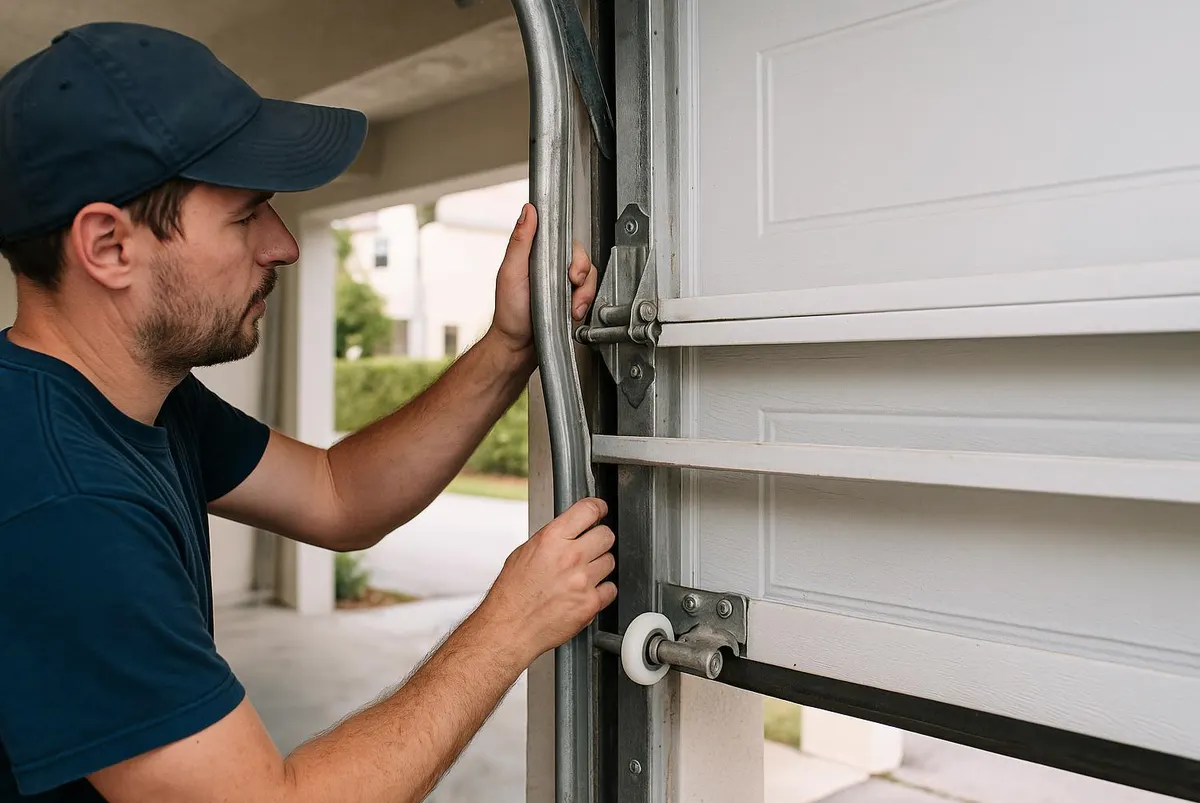
The Mistake Most Homeowners Make First
The moment a garage door starts grinding, squealing, popping, or rattling, the first instinct is to grab a can of WD-40 and spray everything in sight — the tracks, the springs, the opener chain, sometimes even the sensors. It's tempting because it's cheap, takes thirty seconds, and the noise often quiets down for a week or two. The problem is that WD-40 is a solvent, not a lubricant. It strips away whatever grease is already protecting the hardware and leaves surfaces dry again once it evaporates, while attracting dust and grit in the meantime. In Lafayette County's humidity, that dust turns into a gritty paste that wears parts down faster than if you'd done nothing at all. Treating the symptom without identifying the noise first almost always makes the real problem harder to find later.
Grinding
Grinding is a harsh, metal-on-metal sound that usually happens as the door moves, not just when it starts or stops.
- Rollers first: A technician checks the rollers before anything else, since worn or cracked rollers — especially older steel ones — are the most common cause. The fix is roller replacement, often upgrading to nylon rollers that run quieter and hold up better in humid conditions.
- Track alignment next: If rollers look fine, the track gets checked for bends or gaps, which force rollers to grind against metal instead of rolling smoothly. The fix is re-aligning or replacing the damaged section.
- Opener gears last: If the noise is coming from the motor unit itself, worn internal gears are the likely cause. Depending on the opener's age, this means a gear kit repair or, more often, opener replacement.
Squealing
Squealing is a high-pitched sound, usually during opening or closing, and it's almost always a lubrication issue at its root.
- Lubrication check first: Dry rollers, hinges, and the torsion spring are the first suspects. The fix is a proper garage door lubricant applied to hinges, rollers, and springs — not a household spray.
- Roller bearings next: If lubrication doesn't resolve it, the sealed bearings inside the rollers may be worn out. These aren't serviceable individually, so the roller itself gets replaced.
- Spring coils last: Squealing that happens specifically when the door is fully open or closed can mean spring coils are rubbing against each other from rust buildup. Salt-laden air near the coastal parts of the service area accelerates this, and the fix is cleaning and lubricating the spring or replacing it if corrosion has pitted the metal.
Popping
Popping is a sharp, sudden sound, often at one specific point in the door's travel.
- Track and hinges first: A dented section of track or a loose hinge pin will cause the door to catch and then pop free as it passes that spot. The fix is straightening or replacing the track section, or tightening/replacing the hinge.
- Panel material second: For wood or wood-composite doors, humidity swings common in this region cause panels to expand and contract, popping as they rub against the frame or weatherstripping. The fix is trimming the stripping or, in persistent cases, discussing a material change during maintenance.
- Springs last: A single loud pop followed by the door feeling heavier or uneven usually means a spring has partially failed. This is a safety issue, not a lubrication fix — it requires spring repair or replacement by someone trained to handle the tension safely.
Rattling
Rattling is a loose, shaking sound, usually most noticeable near the top of the door run.
- Hardware first: Loose nuts, bolts, and brackets are the most common cause, especially after a season of wind-driven storms that vibrate the whole assembly. The fix is simply tightening everything with a socket wrench, panel by panel.
- Opener chain or belt next: A loose chain on a chain-drive opener will rattle against its housing. The fix is adjusting chain tension per the opener's manual.
- Cables and rollers last: Frayed cables or loose rollers rattling in worn track can also be the source. This typically means cable and roller replacement rather than a simple tightening.
When to Call Mayo Door & Opener
Lubrication and a few tightened bolts can quiet a door down temporarily, but grinding, popping, or a loud bang from the spring area are signs the door is working harder than it should. Mayo Door & Opener handles Cable & Roller Replacement and Garage Door Spring Repair for homeowners throughout Mayo, Perry, Live Oak, Cross City, Branford, Trenton, Old Town, and Steinhatchee, and can tell you in one visit whether you're looking at a $20 fix or a part that's about to fail completely.
If your garage door has started making noise it didn't make a few months ago, call Mayo Door & Opener for garage door repair in Mayo, FL before a small sound turns into a stuck door.